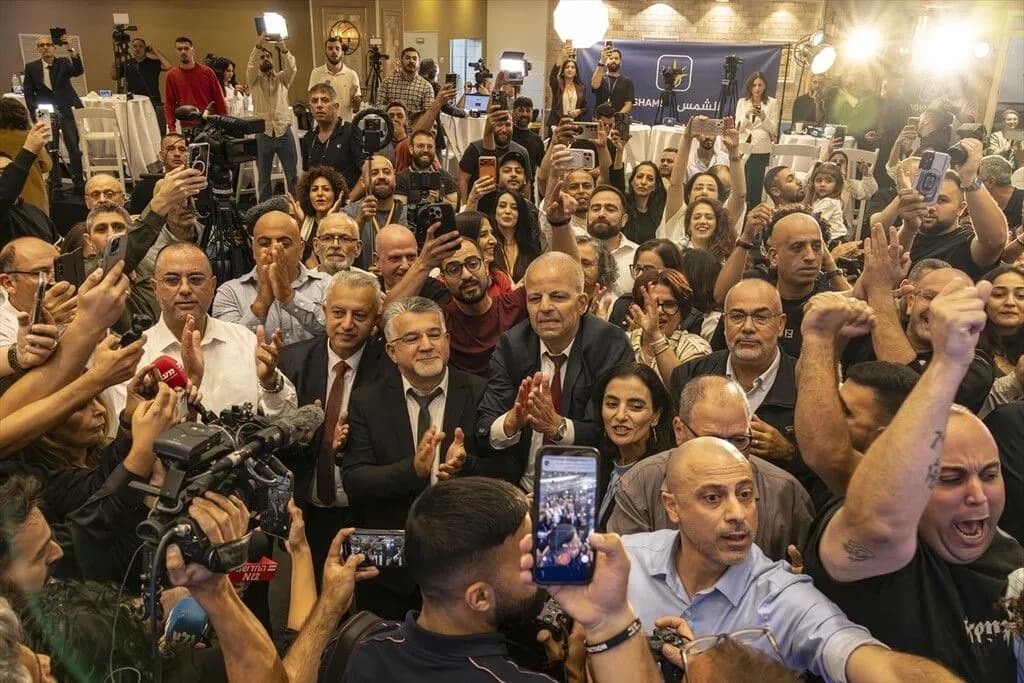
Israel's general elections, marked by the highest turnout in decades, have plunged the country's political landscape into deep division. Preliminary results indicate a tie between the blocs of Benjamin Netanyahu and Gadi Eisenkot, each securing around 51 seats in the Knesset—falling short of the 61 needed to form a government. Meanwhile, Arab lists have emerged as kingmakers, projected to secure 17 to 18 seats. Under these circumstances, Israel faces four potential scenarios:
- Majority Coalition (61 seats): Achieving this is fraught with obstacles. The Israeli President will mandate the candidate with the best chance of forming a government. Netanyahu lacks a clear path since some small right-wing parties failed to cross the electoral threshold, while Eisenkot distanced himself from Arab parties during his campaign. Historically, such negotiations are lengthy; in 2022, it took Netanyahu 58 days to form his cabinet.
- Minority Government with Arab Support: If neither side reaches 61 seats, Arab lawmakers could act as external kingmakers. The Ra'am party previously participated in the Bennett-Lapid cabinet (2021-2022), and the Joint List is ready to serve as a parliamentary safety net for any faction that ousts Netanyahu.
- National Unity Government (Netanyahu and Eisenkot): In this scenario, Netanyahu would drop his far-right and Orthodox allies to partner with Eisenkot. Although a recent poll shows 55% of Israelis prefer this option, a similar 2020 coalition lasted only one year, and Eisenkot's campaign was heavily built on a "No to Netanyahu" platform.
- Political Deadlock and New Elections: The mandated candidate has 28 days to form a government, with a possible 14-day extension. If they fail, Israel will head back to the polls, echoing the 2019-2021 political crisis when four general elections were held in under two years.